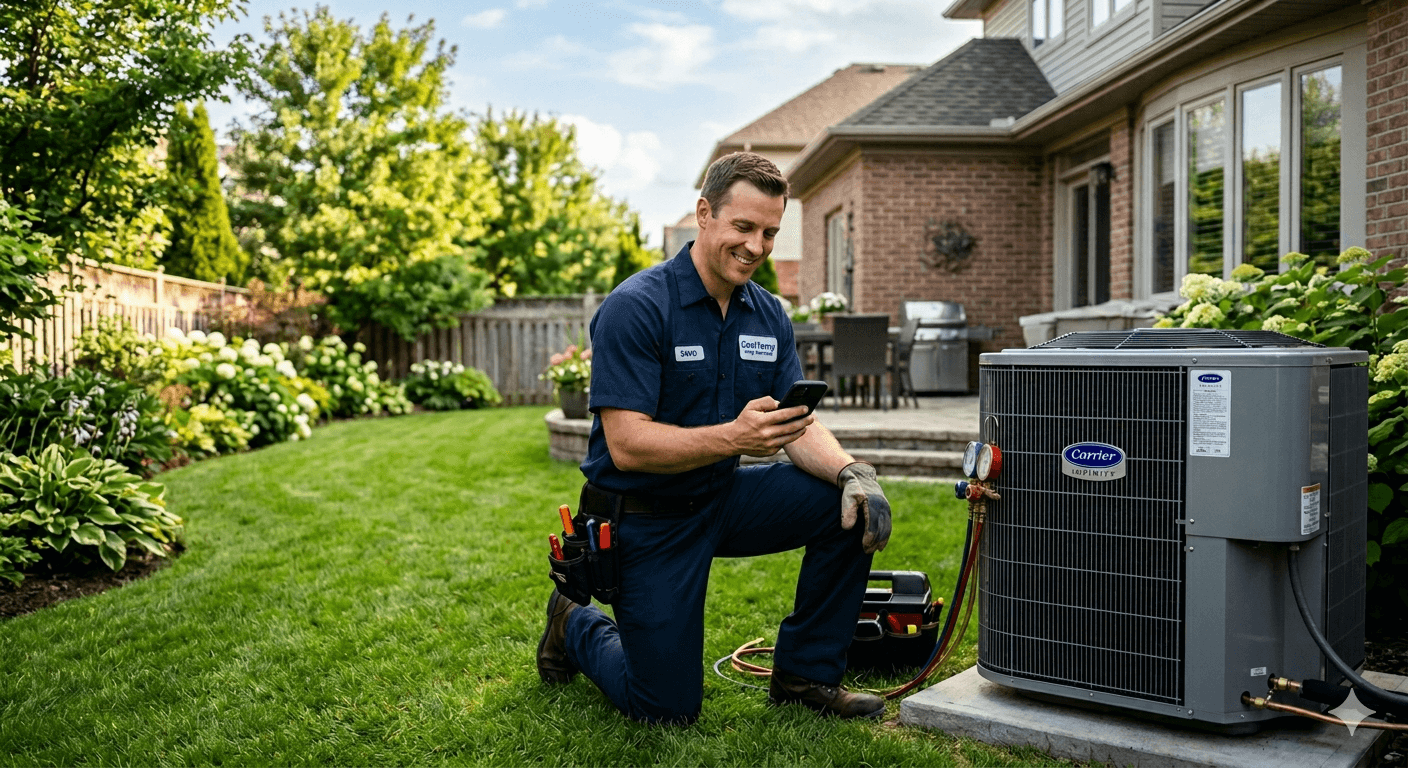
HVAC lead automation in 2026 means automatically answering every inbound call, calling new LSA leads within 60 seconds, booking appointments into ServiceTitan or Housecall Pro, and collecting Google reviews after each job — all without additional staff. AI handles the entire front office so technicians stay focused on the work.
TL;DR: Top HVAC contractors in 2026 don't hire more staff to handle more calls — they automate. HulloDesk answers every inbound call, follows up on every new lead within 60 seconds, and collects Google reviews after every completed job, 24/7.
The US HVAC industry generates nearly $100 billion annually — and demand for service is accelerating, driven by aging residential equipment and increased reliance on climate control. But the industry faces a compounding problem: the skilled technician shortage is widening while consumer expectations for response speed are rising. In this environment, the contractors who win aren't necessarily the ones with the best techs. They're the ones who answer the phone first, follow up the fastest, and systematically collect Google reviews after every job.
Why 2026 Is a Turning Point for HVAC Automation
AI voice technology crossed a practical threshold in late 2024: latency in AI phone conversations dropped below what most callers notice as unnatural. Today's AI voice agents respond, pause, and redirect conversations in ways that feel natural to callers — and they transparently identify themselves as AI, as required by FCC regulations, without losing caller engagement.
For HVAC contractors, this matters because phone calls are still the primary channel for booking service — especially emergency calls. An AI that can answer an inbound call at 11 PM, collect the caller's address and problem description, check availability, and book an appointment is no longer a pilot program. It's a production-ready business tool that costs less than a single missed job per month.
The 3 Pillars of HVAC Lead Automation
- Instant Lead Response. Research published in the Harvard Business Review shows that companies contacting leads within one hour are 7× more likely to qualify them than companies that wait two or more hours. For HVAC contractors, where a homeowner with a broken AC in July is calling multiple businesses simultaneously, being the first to respond isn't just an advantage — it's usually the deciding factor. AI voice agents handle this at scale: every lead, called within 60 seconds, regardless of time of day.
- Automated Scheduling. The back-and-forth of scheduling — availability checks, time zone confirmation, technician routing — is pure overhead that no customer enjoys. AI agents check your real-time calendar and book directly into your CRM. The customer gets a confirmed time and an SMS confirmation before they hang up. No callbacks, no hold music, no "let me check and get back to you."
- Post-Job Review Collection. Google reviews are the most cost-effective marketing channel available to local HVAC contractors. According to BrightLocal's 2024 Local Consumer Review Survey, 87% of consumers evaluate a local business on Google before calling — and review count and recency are direct ranking signals in Google's local search algorithm. An automated post-job call within 24 hours, while the service experience is still fresh, captures reviews that would otherwise never happen.
The Automation Mistakes Most HVAC Contractors Make
Trying to automate everything at once. Contractors who build out a full automation stack before validating the basics typically end up with a fragmented system nobody actually uses. The right approach: identify your single biggest revenue leak first. For most HVAC businesses, that's missed inbound calls or slow lead response. Solve that completely before layering on additional automation.
Treating automation as a substitute for service quality. AI handles communication at scale — it doesn't compensate for a bad job. A dissatisfied customer reached by an efficient follow-up call becomes a public review problem faster. Use automation to systematize what's already working, not to paper over what isn't.
Ignoring post-job automation entirely. Most contractors focus exclusively on lead acquisition and ignore what happens after the job is done. In practice, organic review growth drives inbound call volume at zero marginal cost. A business that grows from 20 to 90 Google reviews over a season often sees a measurable increase in organic local search traffic the following year — calls that come in without any ad spend.
Building Your Automation Stack
A practical starting point for any HVAC contractor:
- Use a field service CRM — Housecall Pro or ServiceTitan — as your operational hub.
- Add an AI voice layer for 24/7 inbound answering and instant lead follow-up.
- Activate post-job review automation tied to job completion status in your CRM.
That's the complete stack. Most contractors can be fully operational within a day. The return is straightforward: if your AI agent books one additional job per week that would otherwise have gone to a competitor's voicemail, it has paid for itself many times over.
How to get started
Follow these clear steps to implement this strategy in your business today.
Standardize Your Inbound Response
Deploy an AI receptionist to answer 100% of calls, ensuring no customer ever hits voicemail during an emergency.
Automate Instant Follow-up
Sync your website lead forms to an AI voice agent that calls new leads within 60 seconds of submission.
Systematize Review Collection
Link your field service CRM to a post-job review agent to automate Satisfaction detection and review requests.
Frequently Asked Questions
Q:What is HVAC lead automation?
Q:How does AI help HVAC contractors with reviews?
Q:Can AI agents handle emergency HVAC calls at night?
The AI Front Office Setup Checklist
Stop losing jobs to missed calls. Get the 4-step checklist we use to set up 24/7 AI receptionists for $1M+ trade businesses.
No spam · Instant PDF delivery · Unsubscribe anytime

Prajwal Kumar is the founder of HulloDesk and an expert in AI voice automation for the trades. He built HulloDesk after watching skilled contractors lose jobs to competitors who simply answered the phone faster. He writes about AI, lead conversion, and practical growth systems for HVAC, plumbing, electrical, and home service businesses.
View all insights by Prajwal

